Bird by Bird
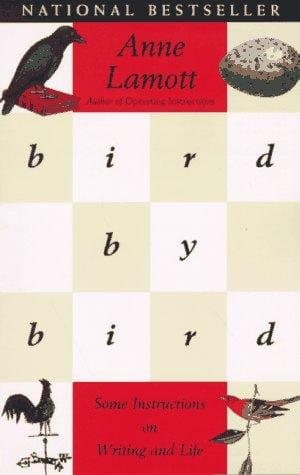
Writing — and life — taken one small assignment at a time, with permission to fail spectacularly in the first draft.
The big idea
Anne Lamott's 1994 book braids practical craft instruction with the lived chaos of a single mother, recovering alcoholic, and incurable overthinker who happens to have published several novels. It takes its title from her father's advice to her panicked ten-year-old brother, paralyzed the night before a school report on birds was due: 'Bird by bird, buddy. Just take it bird by bird.' Across short chapters — 'Shitty First Drafts,' 'Perfectionism,' 'Radio Station KFKD,' 'Looking Around' — Lamott argues that the real obstacle to writing is almost never talent.
Shitty First Drafts: every good piece of writing you'll ever produce begins as garbage.
In the cabin north of San Francisco where she does most of her writing, Lamott would dread restaurant assignments for California magazine. She would beg for extensions, sit at her desk feeling vaguely sick, push the index cards around on which she'd jotted what a particular crab cake had tasted like in Tiburon. Nothing she wrote felt like writing. Then one day she gave up trying to make the first pass any good — and started getting work in on time.
Bird by bird: shrink the project until what's in front of you fits in your hands.
The book takes its title from a scene three decades earlier. Lamott's ten-year-old brother sat at the family's kitchen table the night before a school report on birds was due. He'd had three months. He'd done none of it. Around him on the table were binder paper, pencils, and unopened books on birds — and he sat there immobilized by the size of what he had to do.
Perfectionism is the oppressor — name it, then write past it on purpose.
Lamott devotes a whole chapter to perfectionism, the affliction she considers more dangerous to writers than any external rejection. She describes friends who never finish a book because they cannot allow themselves to write a bad sentence on the way to a good one. The page stays clean. The book never arrives.
KFKD: the grandiose-and-shaming radio station broadcasting in every writer's head.
Above every writer's desk, Lamott imagines, hovers an invisible radio station that broadcasts continuously while she works. She calls the station K-FKD. Out of the right channel comes a grandiose chant — you are a genius, this book will change everything, your reviewers will weep. Out of the left channel runs a relentless catalogue of failures, embarrassments, and reasons a sane person would already have quit.
You own your stories — and the obligation to tell them honestly is yours, not the cast's.
In a later section on memoir and family material, Lamott takes up the most common excuse her writing students bring her: they cannot write about a parent or a sibling or a lover because that person would be hurt by what ends up on the page. She is sympathetic, and unyielding. The material is the writer's. So is the responsibility to tell the truth about it.
The takeaway
Lamott's deepest gift is permission — to write badly, to start small, to ignore the noise in your own head, and to tell your stories without first getting the cast's approval. The book reframes the obstacle as almost never talent and almost always fear, then offers an unromantic answer: sit in the same chair, take it one bird at a time, and trust the second draft to clean up after the first. What works for writing turns out to be a workable instruction for most ambitious things.