Mindset
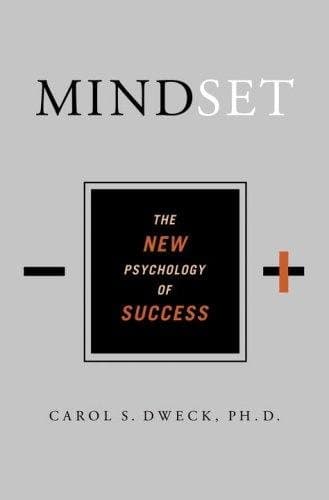
Believing abilities can grow changes whether they actually do.
The big idea
Dweck's research distinguishes a fixed mindset (intelligence and talent are static) from a growth mindset (they're developable through effort and strategy). The mindset you carry shapes how you face setbacks, criticism, and challenges — and accumulates over years into very different outcomes. Praise effort and strategy, not innate talent. The book applies the framework to parenting, education, sports, business, and relationships.
Praise process — effort and strategy — not innate ability.
In the late 1990s, Carol Dweck and her Columbia colleague Claudia Mueller ran what would become one of the most cited studies in motivational psychology. They gave 400 fifth-graders a relatively easy nonverbal reasoning puzzle, then divided them into two groups for a single line of feedback. Half were told 'You must be smart at this.' Half were told 'You must have worked really hard.' One sentence, identical task, randomized assignment.
Failure is information, not identity.
In May 1995, Christopher Reeve was thrown from his horse during an equestrian event and broke his neck at the C1-C2 vertebrae, paralyzing him from the shoulders down. Doctors told him there was no neural pathway by which he could regain motor function. Reeve refused the verdict. For seven years he worked daily through electrical stimulation and physical therapy and eventually regained limited movement in his hands and feet — inducing nerves to forge new pathways neurologists had told him were impossible.
Effort is what makes you smart or talented; it's not a sign you lack ability.
Mozart was, by any measure, a prodigy — but Dweck points out that he composed for over a decade before producing his first masterpiece. The K. 271 piano concerto, regarded by scholars as his first work of true genius, came when he was 21, after fifteen years of intensive daily practice supervised by his father. Even genius, she writes, requires the input of years. The fixed-mindset belief that talent should appear without effort makes effort feel like evidence of inadequacy.
The word 'yet' rescues a fixed-mindset statement: 'I can't do this — yet.'
Dweck describes a Chicago high school that, instead of issuing a failing grade, issued the grade 'Not Yet.' Students given 'Not Yet' kept working at material they had not mastered; students given 'Fail' shut down and disengaged. The word installed a time horizon — your current state isn't your final state — and shifted attention from judgment to learning. Same student, same content, different verdict, different trajectory.
Champions aren't immune to setbacks; they interpret them differently.
On February 24, 2003, Bernard Loiseau, one of France's most celebrated chefs, learned his three-star Michelin restaurant La Côte d'Or might lose a star in the upcoming guide. He had a wife, three children, and a thriving business. That afternoon he went home and shot himself. The Michelin guide was published days later. He had not, in fact, lost the star — but the threat alone had been more than his identity could survive.
Avoid the CEO disease: protecting your image at the cost of learning.
Albert Dunlap, the corporate downsizer hired to turn around Sunbeam in 1996, was a fixed-mindset executive of the purest type. He shut down internal critique, fired anyone who disagreed with him, and inflated short-term financials to preserve his celebrity. Sunbeam restated earnings in 1998, Dunlap was forced out, and the company eventually filed for bankruptcy. The very confidence that had built his celebrity blocked the adaptation that would have saved the company.
You can have a growth mindset in one domain and a fixed one in another — notice which.
Dweck argues mindsets are domain-specific. Someone may be wide-open about athletics ('I'll keep practicing the serve until it's good') and fixed about math ('I'm just not a numbers person'). Same person, same brain, two opposite construals operating in parallel. Most people, when they audit their own self-talk by domain, are surprised to find they harbor a fixed mindset somewhere they had not noticed.
The takeaway
Dweck's gift is showing that a single sentence of praise — 'you must be smart' versus 'you must have worked hard' — can reorganize a child's relationship to challenge for life. Ability is not a verdict; it is a curve, and the word 'yet' restores the time horizon that fixed thinking collapses. You leave watching for your own fixed-mindset triggers and adding 'yet' to every sentence that wants to close the door.