On Writing: A Memoir of the Craft
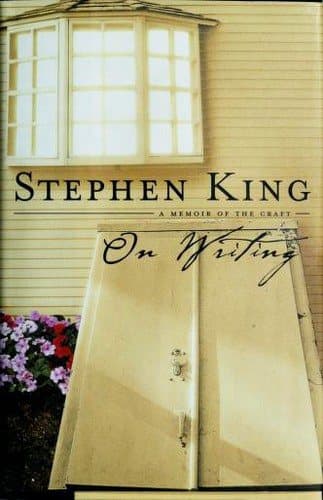
Half memoir, half toolkit — Stephen King hands writers the rules he wishes someone had handed him.
The big idea
On Writing is two books in one cover. The first half is a brisk memoir of King's road from a Maine trailer to selling Carrie — a brother who built homemade circuits, a babysitter who terrorized him, a wife who fished his discarded pages out of the trash. The second half is the working toolkit King has used for forty years: read four hours and write four hours, lock the first draft behind a closed door, then murder your adverbs and cut ten percent on the rewrite.
Read like your career depends on it — because it does.
King's daily routine is non-negotiable: write 2,000 words in the morning, read in the afternoon and evening, every day except Christmas, his birthday, and the Fourth of July — and he admits in the book that he sometimes lies about the holidays. He carries a paperback everywhere — to red lights, to traffic jams, to the dentist's office. The reading is not a reward at the end of a productive day. It is part of the productive day.
Adverbs are the seams where the writing leaks through.
King's pet peeve, told as a long aside in the book's craft section. Writers reach for adverbs the way frightened drivers reach for the brakes — out of fear that the verb didn't carry the load. "He shut the door firmly." The firmly is doing nothing the slamming wouldn't do better. The adverb is the seam where the writer's lack of trust in the reader leaks out.
Write with the door closed, rewrite with the door open.
King's office in the early years was a child-sized desk wedged into the laundry hallway of a doublewide trailer in Hermon, Maine. He wrote Carrie there on a borrowed Olivetti typewriter Tabitha had brought home, with the trailer rocking when the dryer ran. The arrangement was not picturesque — it was the only space the apartment offered. He kept the door, when there was a door, closed.
Kill your darlings — second draft equals first draft minus ten percent.
When King was a teenager submitting horror stories to pulp magazines, he got back the usual run of form rejections. One slip, scribbled in pen in the margin, contained the only revision advice King says he ever needed: "Not bad, but PUFFY. You need to revise for length. Formula: 2nd Draft = 1st Draft – 10%. Good luck." He pinned the slip above his typewriter and worked from it for the next forty years.
After the accident, the work was the thing waiting on the other side.
On June 19, 1999, King was walking on the shoulder of Route 5 in Lovell, Maine — the same four-mile loop he had walked daily for years — when a 1985 Dodge Caravan came over a rise and hit him. The driver, Bryan Smith, had been distracted by his rottweiler reaching for a cooler in the back. King was thrown about fourteen feet into a ditch. His right leg was broken in nine places, his hip was shattered, his ribs broke into his lung, his scalp split open. He was 51 years old.
The takeaway
King's gift is two-handed: the memoir teaches you that the writing life is built out of unglamorous rooms — laundry hallways, child-sized desks, a wife who pulled the manuscript of Carrie out of a wastebasket — and the toolkit teaches you that craft is mostly subtraction. Read four hours, write four hours, lock the first draft behind a closed door, murder the adverbs, cut ten percent. You leave with a working understanding that the rules are not about marketplace success — they are about giving yourself a life the work can survive in.