Rich Dad Poor Dad
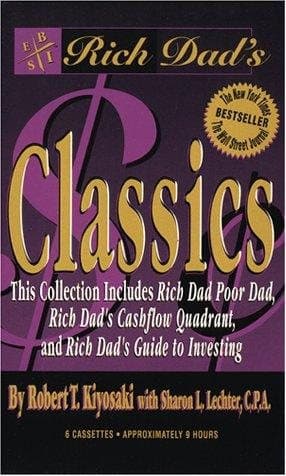
The rich don't work for money — money works for them.
The big idea
Kiyosaki contrasts two father figures: his real father, an educated employee who struggled financially, and his friend's father, a self-made entrepreneur. The 'rich dad' framework redefines assets (things that put money in your pocket) versus liabilities (things that take it out), and argues that financial education — not income — is the real driver of wealth. The book has critics, but its mental shifts have introduced millions to the idea of investing instead of just earning.
Assets put money in your pocket; liabilities take money out — most people confuse the two.
Robert Kiyosaki was nine years old in Hilo, Hawaii, in 1956 when his best friend Mike's father — the man Kiyosaki would call rich dad — pulled out a notebook and drew two boxes. He told Robert and Mike to label every household possession in either the asset or the liability column, based on a single question: does it put money in your pocket each month, or take money out?
The rich buy assets; the poor have only expenses; the middle class buys liabilities they think are assets.
Kiyosaki diagrams three income statements that make the class divide visible. The poor have income going straight to expenses. The middle class have raises going straight into bigger houses, leased BMWs, and credit-card debt. The rich route every raise into the asset column first, where it generates more income — until eventually the income column outruns the wage.
Pay yourself first — investments come out before bills, not after.
Kiyosaki insists on funneling money into investments before paying creditors, which sounds reckless until you realize it forces creative thinking about how to cover the bills. The pressure produces ideas — new income streams, negotiated terms, eliminated expenses — that comfortable cash flow would never demand.
Work to learn, not just to earn — choose jobs for the skills they build.
Kiyosaki recounts taking a low-paying sales job at Xerox in the early 1970s specifically because he was terrified of speaking to strangers. The pay was less than his Marine Corps benefits had been. Three years there gave him the skill that built his fortune. He counsels young people to pick jobs the way you'd pick a school: for what they teach, not what they pay this year.
Financial literacy is taught nowhere in school but determines almost everything.
Kiyosaki's recurring complaint: schools teach scholastic and professional literacy but produce graduates who can't read a balance sheet or distinguish capital gains from cash flow. He claims the difference between the rich and the broke isn't intelligence or income but the basic vocabulary of money — assets, liabilities, cash flow, leverage.
Fear and greed are the two emotions that keep most people stuck in the rat race.
Kiyosaki describes the loop: fear of being broke drives you to take a job, the paycheck triggers greed for more stuff, the stuff requires bigger paychecks, which require bigger fears of losing the job. Even raises don't break it — they just upgrade the cage. Awareness of the loop is the first step out.
Mind your own business — your job pays bills; your asset column builds wealth.
Kiyosaki tells the story of Ray Kroc speaking to a Texas MBA class in the 1970s. After his lecture Kroc asked the students what business he was in. They answered hamburgers. Kroc smiled and said no — he was in real estate. McDonald's just happened to sit on the most valuable corners in America, and every burger sold paid down land Kroc personally controlled.
The takeaway
Kiyosaki's gift is the napkin diagram that splits possessions by cash-flow direction rather than sticker pride. Once you see the dream home as a liability and the unglamorous duplex as an asset, the question stops being 'how much do I earn?' and becomes 'which column is this raise feeding?' You leave treating your job as the bridge and your asset column as the destination — minding your own business while someone else signs your paycheck.