Steve Jobs
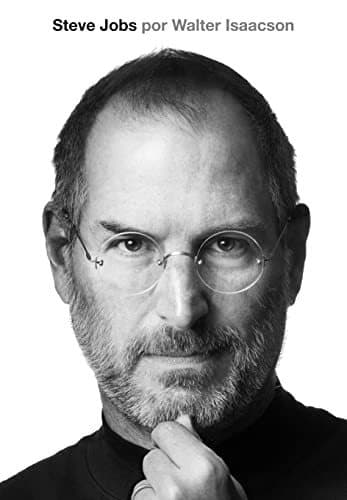
Walter Isaacson's portrait of Steve Jobs — brilliant, brutal, and obsessed with the meeting point of technology and art — is a study in vision, focus, and the resilience to begin again.
The big idea
Walter Isaacson's 2011 biography, drawn from more than forty interviews with Jobs himself and hundreds with those around him, is an unvarnished portrait of one of the most consequential — and difficult — creators of the modern era. It traces Jobs from his adoption and Silicon Valley boyhood through the founding of Apple, his humiliating ouster in 1985, the NeXT and Pixar wilderness years, and his triumphant return to build the iMac, iPod, iPhone, and iPad.
Craftsmanship means caring about the parts no one will ever see.
The obsession began with his father. Paul Jobs, a machinist who repaired cars in the family garage in Mountain View, taught his adopted son that the way you build the hidden parts of a thing matters as much as the visible ones. When they built a fence together, Paul insisted the back look as good as the front, even though it faced the neighbor's yard where no one would notice. Steve absorbed the lesson completely, and it became the standard he held every Apple engineer to for the rest of his life.
Focus is not saying yes to the right thing — it's saying no to a hundred good ones.
When Jobs returned to a near-bankrupt Apple in 1997, he found a sprawling catalog of computers, printers, and peripherals so confusing that even employees could not explain which model a friend should buy. After weeks of product reviews, he lost patience, grabbed a marker, and drew a simple two-by-two grid on a whiteboard: consumer and pro across the top, desktop and portable down the side. Apple, he announced, would make four great computers, one for each square, and kill everything else.
The reality distortion field: willing the impossible into existence.
Early Macintosh engineer Bud Tribble borrowed a phrase from Star Trek to warn a new colleague about working with Jobs. In Jobs's presence, Tribble said, reality became malleable; he could convince anyone of practically anything, and the effect wore off the moment he left the room. The team, half in exasperation and half in awe, named it the reality distortion field — a blend of charisma, willpower, and sheer refusal to accept that something could not be done.
Great products live at the intersection of technology and the liberal arts.
After six months, Jobs dropped out of Reed College — but he kept hanging around campus, dropping in on classes that interested him with no thought of a degree or a job. One of them was a calligraphy course. He learned about serif and sans-serif typefaces, about the space between letter combinations, about what makes typography beautiful. It was purely for its own sake, with no conceivable practical application to a boy who had no money and no plan.
Getting fired was the best thing that ever happened to him.
In 1985, at the age of thirty, Steve Jobs was forced out of the company he had co-founded in his parents' garage. He had clashed for months with CEO John Sculley — the executive Jobs himself had recruited from Pepsi — and when he tried to engineer Sculley's removal, the board sided with Sculley. Jobs was stripped of all operating authority. He was a very public failure, and he later admitted he spent months devastated, even thinking of leaving Silicon Valley entirely.
The takeaway
Isaacson's Jobs is not a model to imitate but a paradox to learn from — a man whose cruelty and genius sprang from the same refusal to accept the world as given. What endures is his conviction that products are art, that focus is the discipline of saying no, that your stray passions will one day connect, and that failure can be the making of you. Beneath the tantrums lies a simple, exacting creed: care about the quality all the way through, even where no one is looking.