The 5 Love Languages
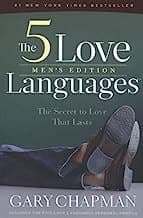
We give love in our language; they need it in theirs.
The big idea
Chapman, a marriage counselor, argues most relationship friction is a translation problem: people give love in the language they prefer to receive, while their partner is fluent in a different one. The five languages are words of affirmation, quality time, receiving gifts, acts of service, and physical touch. Most people have a primary and secondary; figuring out your partner's and speaking it consistently can transform a struggling relationship.
The five languages: words of affirmation, quality time, gifts, acts of service, physical touch.
Gary Chapman developed the framework after thirty years of marriage counseling at his Winston-Salem practice. Between 1980 and 1990, he hand-categorized complaints from thousands of couples, looking for clusters. The same patterns kept emerging: 'I do everything for him and he says I'm not loving' versus 'she gives me things but never her time.' Five distinct dialects of love. He named them and tested them against new clients for years before publishing in 1992.
Most people give love the way they want to receive it — that's the source of most friction.
Chapman tells of a husband who built his wife a beautiful deck off their kitchen — labored every weekend for months, came home exhausted on weekdays from his day job. His act of service. He was hurt when she said he didn't love her anymore. Her language was quality time. She wanted him to sit on the deck with her after he built it. He'd been speaking fluent French to a woman who only understood Italian, and getting frustrated that she didn't respond.
Identify your partner's primary language by what they ask for and what they complain about.
Chapman's diagnostic shortcut after thirty years of counseling: complaints reveal the unmet language. 'You never talk to me anymore' = quality time. 'You never tell me you love me' = words of affirmation. 'You never help around the house' = acts of service. 'We never have sex anymore' often = physical touch (or, sometimes, intimacy via another language). The complaint sounds like criticism but is a love-tank gauge running near empty.
Love is a choice — it's an action verb that follows the feeling, not the other way around.
Chapman tells of a couple, Glenn and Barbara, six years into a stale marriage who came to him for divorce counseling in the 1980s. He asked them to act as if they loved each other — speaking each other's language — for six months and report back. They argued about the assignment but agreed. Three months in, Barbara reported the feelings had returned. They cancelled the divorce. Action came first; emotion followed.
Quality time means undivided attention; phones away counts as much as words.
Chapman describes a couple, Bill and Betty Jo, who watched television together every evening for years and yet Betty Jo felt starved for connection. Chapman counseled Bill to take a thirty-minute walk alone with her each evening, no phones, with sustained eye contact and follow-up questions about her day. Within a month, Betty Jo described the marriage as transformed. The clock time was lower; the attention quality was incomparably higher.
Acts of service shouldn't keep score — score-keeping turns gifts into transactions.
Chapman tells of a husband who tracked every chore he did — cleaning the kitchen, taking out the trash, fixing the porch step — and presented his wife with the printed tally at a marriage counseling session, expecting gratitude. Instead, she felt patronized. The list humiliated her; love, when itemized, becomes a debt collection notice. The act of service expresses love only when given freely.
Speak your partner's language even when it doesn't feel natural to you.
Chapman opens up about his own marriage to Karolyn, fifty years and counting. Her language was acts of service; his was words of affirmation. He had to learn to vacuum and unload the dishwasher consciously for years before it became natural. Speaking imperfectly communicates more than not speaking at all — like learning French as an adult, you'll have an accent forever, but the visible effort itself communicates love.
The takeaway
Chapman's gift is reframing relational pain as a translation problem rather than a character flaw. Once you've seen the husband who built a deck for a wife who wanted him to sit on it, you stop scoring love by your own dialect and start asking what fluency the other person is actually waiting for. You leave understanding that love is a verb chosen daily — and that speaking imperfectly in your partner's language communicates more than fluent speech in your own.