The 7 Habits of Highly Effective People
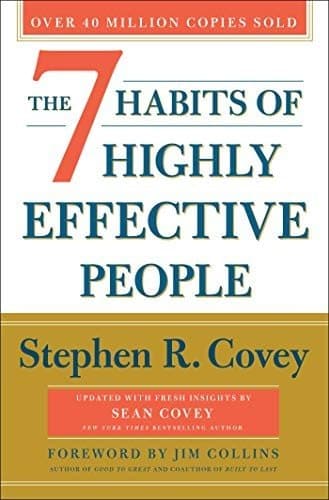
Character-based effectiveness, sequenced from private victory to public victory.
The big idea
Covey's classic frames effectiveness as a progression: first master yourself (be proactive, begin with the end in mind, put first things first), then master interdependence with others (think win-win, seek first to understand, synergize), and finally renew yourself continuously. The book privileges character ethics — integrity, courage, justice — over personality tricks. It's less a productivity system than a worldview for principled adult life.
Be proactive: focus on your circle of influence, not your circle of concern.
A father once came to Covey distraught about his son. The boy was failing school, withdrawing socially, refusing to engage. The father kept repeating one phrase: 'I just can't do anything about him.' Covey asked what was actually within the father's reach. Not the boy's choices — the father's own. His tone of voice when the son walked in the room. The questions he asked at dinner. Whether he praised effort or only outcomes. Within weeks of changing his own behavior toward the boy, the relationship transformed.
Begin with the end in mind — write a personal mission statement.
Covey opens Habit 2 with a thought experiment that reportedly took him three years to refine in his MBA classes at Brigham Young: picture yourself walking into a funeral parlor, and the casket at the front is yours. A spouse, a child, a colleague, and someone from your community each rise to speak. What do you want each one to say? Most students leave the exercise stunned by the gap between those eulogies and the lives they were actually building.
Put first things first: spend time on important non-urgent work (Quadrant II).
Covey told the story of a Lockheed executive whose week was consumed by emergencies — vendor calls, escalations, fires lit by other people's deadlines. Covey suggested one experiment: block one full afternoon per week for uninterrupted strategic thinking, and treat that block as immovable as a board meeting. Within twelve months the executive's division had its strongest results in a decade because the urgent crises he'd been firefighting were downstream of strategic gaps he'd never had time to address.
Think win-win — most negotiations don't have to be zero-sum.
Covey described a software company president who spent two years pushing what he called 'team competition' — quarterly leaderboards, bonus pools awarded only to the top quartile, public ranking of underperformers. Productivity declined, hoarding of information increased, and senior engineers began quietly interviewing elsewhere. The CEO eventually realized he had built a win-lose system inside what he wanted to be a collaborative culture, and that no amount of motivational speeches could fix incentives pulling the other direction.
Seek first to understand, then to be understood. Listen with intent to understand, not to reply.
Covey told of coaching a father who arrived at his office repeating one complaint: 'I just don't understand my son. He won't listen to me.' Covey paused and reflected the sentence back: 'You don't understand your son because he won't listen to you?' The father agreed, then froze as he heard the inversion. His mental model — that understanding flows from being heard — was the entire problem. He left committed to a different experiment: listen for two weeks before saying a word.
Synergize: 1 + 1 can equal 3 when differences are valued.
Covey illustrated synergy with a husband and wife at impasse over a vacation. He wanted a fishing trip with their sons; she wanted to visit her ailing mother in Ohio. Each rehearsed the other's stubbornness for weeks. When Covey walked them through Habit 5 first — both restating the other's deepest want until the other felt fully understood — the actual needs surfaced: father-son reconnection, daughter-mother time. The trip they designed visited grandmother for a week and ended with three days fishing nearby. Neither of those itineraries existed before the conversation.
Sharpen the saw — renew physical, mental, social, and spiritual capacity.
Covey opened Habit 7 with the parable of the woodcutter who has been sawing all afternoon and is making slower and slower progress. A passerby suggests he stop and sharpen the blade. The woodcutter replies, 'I don't have time — I'm too busy sawing.' Covey identified this as the most common pathology of ambitious people: the saw they rely on for every other achievement gradually dulls under the weight of their own productivity, and they have neither the time nor the awareness to notice.
The takeaway
Covey's gift is treating effectiveness as a character problem before a tactical one — private victory before public victory, principles before personality. The funeral exercise and the Big Rocks jar are not productivity hacks; they're forcing functions for a life you'd actually want to have lived. You leave less interested in optimizing your calendar and more interested in whether the ladder is leaning against the right wall.