The Gifts of Imperfection
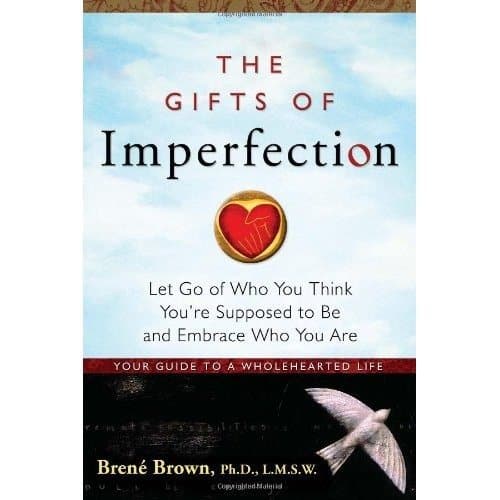
Letting go of who you should be to embrace who you are.
The big idea
Brown identifies ten guideposts to wholehearted living — the daily practices that distinguish people who feel a deep sense of love and belonging from those who struggle for it. Perfectionism, she argues, is a 20-ton shield we lug around thinking it'll protect us; in fact, it prevents us from being seen. Letting go of approval, comparison, and certainty makes room for joy, creativity, and authentic connection.
Perfectionism is not striving for excellence — it's a shield against shame.
Brown's distinction came out of six years of interview coding at the University of Houston Graduate College of Social Work. Healthy striving asked 'how can I improve?' — internal, motivating, oriented to the work. Perfectionism asked 'what will they think?' — external, oriented to avoiding judgment. The two looked identical from outside, but the second was correlated with depression, anxiety, addiction, and missed opportunities.
Belonging requires showing up as yourself, not fitting in.
Brown's research with eighth-graders produced a definition adults rarely articulate as cleanly. The kids told her: 'Fitting in is being who you think they want you to be. Belonging is being who you are.' Fitting in, then, is the opposite of belonging — it requires you to suppress the very self the group might bond with.
Cultivate authenticity by letting go of what people think.
After her June 2010 TEDxHouston talk crossed a million views, Brown woke at 4am and read a thousand internet comments — the cruelest ones lodged in her chest. She climbed out of the spiral by listing on a small card the few people whose opinion actually mattered to her. Authenticity, she writes, is a daily choice. The daily letting-go is the practice.
Practice gratitude and joy as a daily discipline, not as a response to good fortune.
Every wholehearted person Brown interviewed kept a gratitude practice — written, spoken, prayed — not because they had more to be thankful for, but because the practice itself reshaped what they noticed. Joy, she found, is the most vulnerable emotion we feel, because in the moment of joy we sense it could be taken. Gratitude is what stops us flinching from it.
Comparison is the thief of joy — your work is not theirs.
Brown calls social media a perfectionist's casino — endless polished snapshots of other people's highlight reels arriving at exactly the moments your own life feels most ordinary. She describes catching herself comparing her writing to a peer's at a book signing and feeling worth shrink in real time. The comparison didn't produce growth. It produced erosion.
Numbing — through alcohol, food, busyness — numbs joy along with pain.
Brown's most surprising research finding came from coding hundreds of interviews about coping: emotions don't sort themselves. Subjects who numbed the lows with wine, scrolling, overwork, or food reported the highs going quiet too. The brain doesn't have a volume knob for negative emotion alone. Numbing the bottom of the range numbs the top.
Rest and play are nonnegotiable parts of a wholehearted life.
Brown's family installed play days — phones off, calendars off, to-do lists banned. The result wasn't laziness but a refilling of the well that productivity had been draining. The wholehearted, Brown found, refused the cultural badge that says 'I'm exhausted, therefore I matter.' They treated rest as the prerequisite for work, not its reward.
The takeaway
Brown's quieter gift here is the curriculum of wholeheartedness — the practices that distinguish people who feel worthy of love now from those endlessly trying to earn it. Perfectionism is not striving for excellence; it's a twenty-ton shield against shame, and you cannot numb the lows without numbing the highs. You leave with the daily letting-go of who you should be, the specific gratitude entry that couldn't have been written yesterday, and rest defended against your own instinct to fill the gap.