The Happiness Project
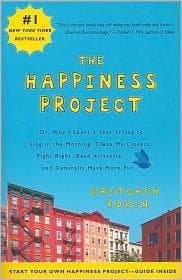
A year-long DIY experiment in becoming happier — with what already works.
The big idea
Rubin spent a year systematically applying happiness research to her own life: a different theme each month (energy, marriage, work, parenthood, money) with concrete resolutions and a tracking chart. The book isn't about overhauling life; it's about being incrementally happier inside the one you already have. Her honesty about what worked, what didn't, and where good intentions broke down makes it unusually grounded for the genre.
The days are long but the years are short — small consistent changes outweigh dramatic ones.
Gretchen Rubin was riding a Manhattan crosstown bus one rainy afternoon with her two daughters, Eliza and Eleanor, when the line landed in her head. The hour stretched — kids whining, traffic stopped, rain leaking through her boots. The years, she realized, would feel like minutes in retrospect. She started the project the next month, January 2008, mapping a different theme every month: energy, marriage, work, parenthood, money, mindfulness.
Sleep, exercise, and decluttering are unsexy but reliably move the happiness needle.
Rubin started January with what she called 'Boost Energy' — going to bed by 10:30, exercising more, getting clutter under control. Mood lifted measurably within weeks even before her more interesting resolutions kicked in. The unglamorous foundations gate everything else; you can't stack a meaningful work life on top of chronic exhaustion.
Be Gretchen — design happiness around who you actually are, not who you wish you were.
“Be Gretchen.”The opposite of a deep truth is also true — extroversion and solitude can both make you happier.
Rubin borrows from physicist Niels Bohr, who reportedly said in conversation: the opposite of a fact is a falsehood, but the opposite of a profound truth is often another profound truth. 'Reach out to friends' is true; 'protect time alone' is also true. The point is to find which side applies to you in this season — not to swallow generic advice as universal law.
Outer order contributes to inner calm.
Rubin spent a month decluttering closets, clearing inbox drifts, fixing nagging maintenance — what she called 'shrines' (piles of papers, mismatched mugs, broken umbrellas accumulated in corners) — and found her mood improved out of proportion to the effort. Her apartment looked the same to outsiders, but she described feeling like the lights had been turned up.
What you do every day matters more than what you do once in a while.
“What you do every day matters more than what you do once in a while.”There is no finish line; happiness is a practice, not a destination.
Rubin found that even after the project succeeded — and the book that followed became a #1 New York Times bestseller — the work continued. Happiness wasn't a state she'd reached but a posture she had to keep choosing. She quotes the writer Francis Bacon: 'A man's nature runs either to herbs or to weeds; therefore let him seasonably water the one and destroy the other.'
The takeaway
Rubin's gift is replacing the search for happiness with the practice of it. Once you've seen her bus-stop epiphany — the days are long but the years are short — and her Franklin-style refrigerator chart, you stop waiting for life to deliver fulfillment and start tweaking the thirty-percent of well-being that's actually within reach. You leave running thirty-day experiments on small daily things: outer order for inner calm, one-minute rules, sleep before everything else, because frequency dominates intensity for almost every input that matters.