The War of Art
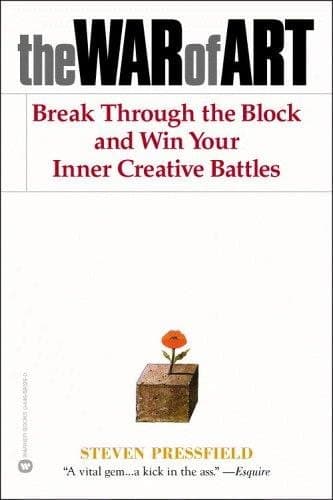
Resistance is real, intelligent, and trying to stop you. Beat it daily.
The big idea
Pressfield names the force that keeps creative people from doing their work: Resistance. It's procrastination, self-doubt, perfectionism, distraction, fear — all the ways the mind protects itself from the discomfort of making something real. The book is short, punchy, almost militaristic. The cure is simple and brutal: turn pro. Show up daily. Sit at the desk whether or not the muse arrives. Don't argue with Resistance; just outwork it.
Resistance is the universal force keeping you from your work — it never sleeps.
Steven Pressfield was 42 years old, twice-divorced, and broke when he finished his first novel. The years before that he'd lived in his car for stretches, driven an 18-wheeler across America, picked apples in upstate New York, and worked the overnight shift at a Mineola, Long Island mental hospital. Anything to avoid the typewriter waiting in the next town. He came to call the force keeping him away from the page Resistance.
The amateur waits for inspiration; the professional shows up regardless.
Pressfield contrasts the weekend writer who waits for the muse with the working novelist who sits down at 9am because that's the agreement. He profiles W. Somerset Maugham, who when asked if he wrote on a schedule replied that inspiration struck every morning at nine sharp. The discipline is what summons inspiration, Pressfield argues, not the other way around — and the muse only knows where to find people who keep the appointment.
Fear is a sign you're doing the right thing — Resistance only attacks meaningful work.
Pressfield recounts a conversation with a screenwriter friend who confessed he'd been avoiding starting a script for three years — the dread was overwhelming. Pressfield's read: the dread itself was diagnostic. His own most-resisted projects had become his best work. The fear scaled with the importance, not against it. The script the friend dreaded most was the one most worth writing.
Sit down, do the work, every day. The muse rewards routine, not flair.
Pressfield's writing ritual is precise: a specific chair, a small statue of Athena (goddess of inspiration) on the desk, a cigar he doesn't light but holds in his mouth to signal 'work mode.' He recites a passage from Homer's Odyssey before opening the manuscript — an invocation to the Muses. The ritual sounds theatrical, but he's been doing it for thirty years and credits it with summoning the daily focus.
The most important thing about art is to work — not talk, plan, or brand.
Pressfield recounts being courted by Hollywood for a script he hadn't written yet. He was dining with executives, fielding phone calls, taking meetings about characters that didn't exist on paper. After several weeks of glamour with no pages produced, he realized none of it was the work. He went home, canceled the meetings, and sat back down at the desk. The script came together once the social theater stopped.
Your work matters because it's yours; doing it badly beats not doing it.
Pressfield argues that the cost of unwritten books, unpainted paintings, unstarted businesses isn't only personal — the world is denied something only you could have made. He invokes Marcus Aurelius's morning meditation: 'At dawn, when you have trouble getting out of bed, tell yourself: I have to go to work.' The work is yours; not doing it is theft from a future that needed your contribution.
The day you turn pro, life gets simpler, harder, and more honest.
Pressfield describes the moment he turned pro: he'd spent the morning rewriting the same sentence over and over, hating it. He stood up to walk away when something stopped him. He sat back down. That single minute, repeated daily for years, became his career. He invokes Hemingway, who said the only writing rule was 'apply the seat of your pants to the seat of the chair.' Turning pro, he insists, is a private decision.
The takeaway
Pressfield's gift is naming the invisible enemy. Once you've met Resistance — the malevolent intelligence that knew his weak hours through twelve years of avoidance before he wrote his first novel at 42 — you stop calling your avoidance laziness and start treating it as the signal it is: the size of the dread is the size of the work worth doing. You leave turning pro, which simply means showing up daily because the muse only knows the addresses where the lights stay on.