Summary
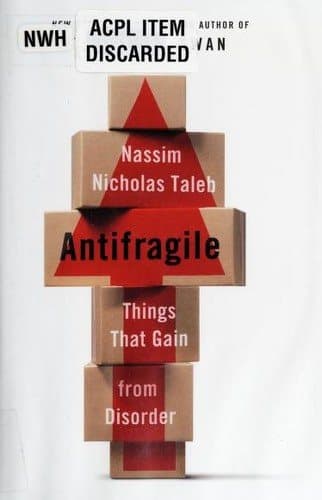
Nassim Nicholas Taleb argues that the world is divided into three kinds of things: the fragile, which break under stress; the robust, which merely endure it; and the antifragile, which actually improve from volatility, disorder, and shocks. He coins the word because no language had one — and insists antifragility is the hidden engine behind evolution, innovation, muscle growth, and functioning markets. Modernity's great error, he says, is the compulsion to suppress every fluctuation — bailing out failing banks, medicating every symptom, smoothing every recession — which only transfers fragility and guarantees bigger collapses later. His prescriptions are practical: the barbell strategy of pairing extreme safety with small, capped, high-upside bets; via negativa, the discipline of improving by subtraction rather than addition; and skin in the game, the demand that anyone making decisions share in the downside. Drawing on Seneca, Mithridates, his recurring street-smart character Fat Tony, and his own years as an options trader, Taleb builds a philosophy for thriving in a world we cannot predict. The point is not to forecast Black Swans but to build a life that quietly gains from them.
Key highlights
What we learned from Nassim Nicholas Taleb
Taleb's gift is a new lens: stop asking whether something will survive the next shock and start asking whether it can be built to gain from it. The practical handles — barbell your risks, improve by subtraction, and refuse to trust anyone who has no skin in the game — are less about predicting the future than about arranging your life so that an unpredictable world tilts in your favor. The deepest lesson is that comfort and the suppression of all volatility are not safety; they are how fragility quietly accumulates.