Summary
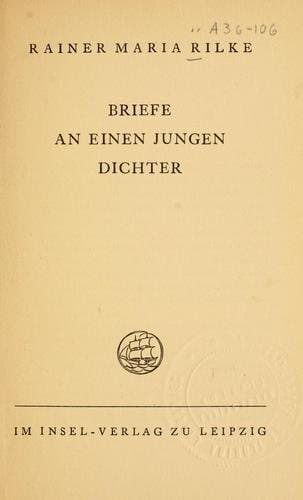
In 1902 a nineteen-year-old military cadet named Franz Xaver Kappus, unsure whether to become a poet or a soldier, sent some of his verses to Rainer Maria Rilke and asked for judgment. Rilke — only twenty-seven himself, newly arrived in Paris to write a study of the sculptor Auguste Rodin — refused to grade the poems and instead wrote back about how to live. Over ten letters between 1903 and 1908, sent from Paris, Italy, and Sweden, he counsels solitude, patience, and an unflinching turn inward. He tells Kappus that no critic can answer the only question that matters — whether he must write — and that the unresolved things in a young life are not problems to solve but questions to inhabit. After Rilke died in 1926, Kappus gathered the letters and published them in 1929, withholding his own replies so the book would read as pure counsel. The result became one of the most enduring guides to the creative and inner life ever written, beloved by artists, mystics, and anyone facing the unanswered questions of their twenties.
Key highlights
What we learned from Rainer Maria Rilke
Rilke's gift is to take a young person's frantic demand for answers and replace it with a slower, braver way of living — turning inward to find what is necessary, embracing solitude and difficulty rather than fleeing them, and trusting that an unresolved life can be inhabited until it ripens. He never tells Kappus what to choose; he teaches him how to wait, how to look, and how to love the questions. More than a century on, the letters still read as counsel written directly to anyone standing at the edge of their own unanswered life.