Summary
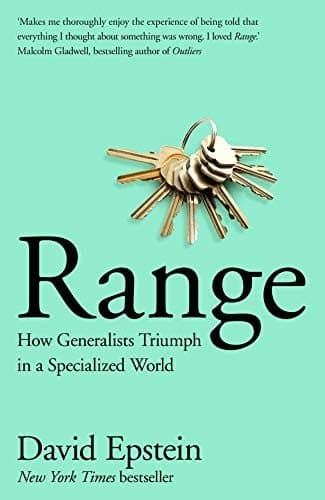
Epstein opens by contrasting two athletes the world worships: Tiger Woods, who was putting before he could walk, and Roger Federer, who played squash, skiing, and soccer and only drifted to tennis as a teenager. The book argues that Tiger's path of narrow, early hyperspecialization is the exception we mistake for the rule. Drawing on research into chess, music, science, and business, Epstein shows that most domains are 'wicked' learning environments where repetition and early focus can actively mislead, and that breadth, analogical thinking, and a willingness to switch fields produce the people who solve the hardest problems. He profiles late bloomers like Vincent van Gogh and Frances Hesselbein, inventors like Nintendo's Gunpei Yokoi, and the 'freestyle' chess teams where amateurs plus laptops beat grandmasters. Match quality — finding the work that fits you — matters more than a head start, and finding it requires trying things and quitting. The danger of expertise, he warns, is that deep specialists cling to familiar tools even as the ground shifts beneath them.
Key highlights
What we learned from David Epstein
Epstein's gift is permission to wander. He marshals evidence that breadth, late starts, and the willingness to quit and switch are not detours from mastery but the path to it in a complex world. The real skill he leaves you with is range itself — the capacity to sample widely, think by analogy across fields, and drop your familiar tools the moment the ground shifts.