Measure What Matters
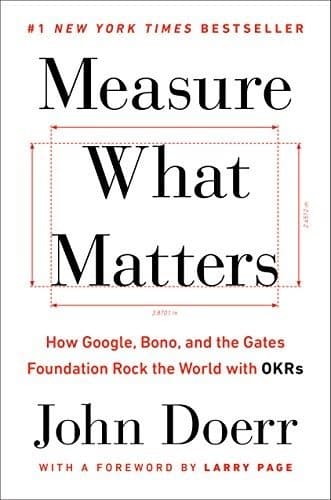
The goal-setting system behind Intel, Google, and the Gates Foundation — how a handful of measurable objectives turn scattered effort into outsized results.
The big idea
John Doerr learned the discipline of Objectives and Key Results from Andy Grove at Intel in the 1970s, then carried it into Google in the fall of 1999 when the company was barely a year old. The idea is deceptively simple: an Objective is a clear statement of what you want to achieve, and each Key Result is a measurable milestone that proves whether you got there. Doerr organizes OKRs around four "superpowers" — focus and commit to priorities, align and connect for teamwork, track for accountability, and stretch for amazing.
OKRs separate the what from the how: an objective sets the direction, a key result proves you arrived.
In 1975 John Doerr was a twenty-something engineer fresh to Intel when he sat through a management course taught by Andy Grove, the company's intense, Hungarian-born operations chief. Grove had no patience for vague ambition. He wanted goals you could not fudge — statements of intent paired with numbers that would later settle, without argument, whether you had succeeded or failed. Doerr walked out of that room with a tool he would spend the next four decades evangelizing.
Focus and commit: a handful of priorities beats a long list of good intentions.
By 1979 Intel was in danger. Its 8086 microprocessor was being outsold by Motorola's elegant 68000, and the sales force was losing design wins by the week. Grove convened a crisis task force, and within days the company launched what it called Operation Crush — a single, ferocious corporate objective to reestablish the 8086 as the industry's choice, broken into hard key results like winning two thousand design sockets in a year.
Align and connect: when goals are public, teamwork stops being a slogan.
When Doerr first pitched OKRs to Google in the fall of 1999, the company was a year old and crammed above a bike shop, with Larry Page and Sergey Brin presiding over a few dozen employees. He brought a slide deck and a conviction. What stuck most was not the formula but the transparency: at Google, OKRs would be visible to everyone, so that any engineer could look up what the CEO was trying to accomplish and how their own work connected to it.
Track for accountability: goals are living documents you grade honestly, not file and forget.
An OKR, in Doerr's telling, is not carved in stone at the start of a quarter and rediscovered, dusty, at the end. It is a living contract that gets checked, nudged, and re-scored along the way. At Google, teams grade each key result on a scale from zero to one and color the results, then look the numbers in the eye without flinching.
Stretch for amazing: audacious goals you might miss beat safe goals you'll surely hit.
In 2012, YouTube's leaders made a bet that looked almost unhinged. Cristos Goodrow and CEO Susan Wojcicki set an objective to reach one billion hours of daily watch time — roughly ten times where the site stood — and gave it a multi-year runway. The number was deliberately uncomfortable, chosen because a merely reasonable target would have produced merely reasonable effort.
The takeaway
Doerr's gift is a refusal to let ambition stay vague: pair every objective with a number that will, in time, settle the question of whether you did it. The four superpowers — focus, alignment, tracking, and stretch — turn that one habit into a way an entire organization decides what matters and then proves it. The deeper truth is that ideas are cheap and execution is everything, and that goals you actually revisit are the only ones that change what you do.