Summary
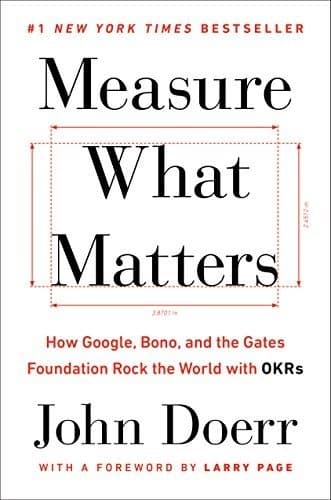
John Doerr learned the discipline of Objectives and Key Results from Andy Grove at Intel in the 1970s, then carried it into Google in the fall of 1999 when the company was barely a year old. The idea is deceptively simple: an Objective is a clear statement of what you want to achieve, and each Key Result is a measurable milestone that proves whether you got there. Doerr organizes OKRs around four "superpowers" — focus and commit to priorities, align and connect for teamwork, track for accountability, and stretch for amazing. He illustrates each with real campaigns: Intel's all-out Operation Crush against Motorola, YouTube's audacious bet on one billion hours of daily watch time, the Gates Foundation's measurable war on disease, and Bono's data-driven activism with the ONE Campaign. Threaded through is a second practice he calls CFR — Conversations, Feedback, and Recognition — meant to replace the dreaded annual review with continuous dialogue. The throughline is that ideas are cheap and execution is everything, and that transparent, measurable goals are how organizations decide what truly matters and then prove it.
Key highlights
What we learned from John Doerr
Doerr's gift is a refusal to let ambition stay vague: pair every objective with a number that will, in time, settle the question of whether you did it. The four superpowers — focus, alignment, tracking, and stretch — turn that one habit into a way an entire organization decides what matters and then proves it. The deeper truth is that ideas are cheap and execution is everything, and that goals you actually revisit are the only ones that change what you do.