Summary
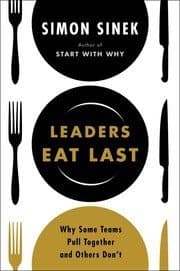
Sinek argues that great leaders create what he calls a Circle of Safety — an environment where people feel protected from internal threats so they can focus their energy on external ones. He grounds the argument in biology: four chemicals (endorphins, dopamine, serotonin, oxytocin) drive our social behavior, while a fifth (cortisol) corrodes trust. When leaders prioritize numbers over people, cortisol floods the organization and cooperation collapses. When leaders sacrifice their own comfort for their team — literally eating last in the chow line, as Marines do — oxytocin and serotonin take over and the group becomes capable of remarkable things. The book is a defense of an old idea: leadership is responsibility, not rank.
Key highlights
What we learned from Simon Sinek
Sinek's gift is grounding leadership in biology: a Circle of Safety releases oxytocin and serotonin, while internal threats flood the org with corrosive cortisol. The Marine officers who literally eat last, Bob Chapman's furloughs at Barry-Wehmiller, Johnny Bravo descending through cloud cover — each shows the same pattern. You leave understanding that leadership is responsibility, not rank, and that the cost you absorb for your people is what releases the chemistry that makes the work remarkable.