The Millionaire Next Door
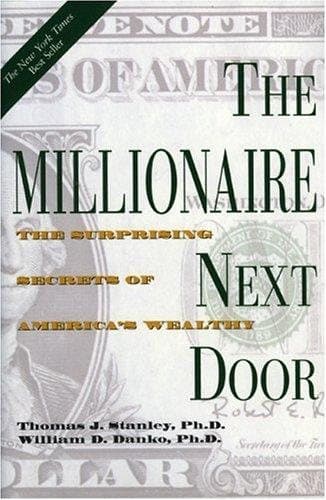
The real American millionaires drive used pickups and live in starter homes — and that, the data shows, is precisely why they got rich.
The big idea
Thomas Stanley and William Danko spent two decades surveying and interviewing American millionaires, and what they found upended the popular image of wealth. The typical millionaire was a self-employed business owner — a paving contractor, a scrap dealer, a welding supply shop owner — who drove a used domestic car, lived in the same middle-class neighborhood for decades, and could recite his household's annual spending on socks.
Wealth is what you keep: the millionaire next door is the one you'd never guess.
In the early 1990s, Thomas Stanley rented a Manhattan penthouse to host a focus group of decamillionaires. He laid out four pounds of caviar, pâté, gourmet hors d'oeuvres, three cases of fine wine — the spread a researcher might expect to flatter people worth eight figures. The first millionaire walked in, scanned the table, and asked for a scotch. He did not touch the caviar. Almost none of them did.
The formula: age times income divided by ten — and most professionals fail it.
Stanley taught finance classes for years and would write a single formula on the board: multiply your age by your pretax household income, then divide by ten. That, he told students, was roughly what your net worth ought to be by now. The number that came back on the chalkboard was, for most families, two or three times what they actually had. The room would go quiet.
Big Hat, No Cattle: the high-income trap of the income-statement affluent.
Stanley borrowed a Texas expression for the most common American financial pose: Big Hat, No Cattle. The Cadillac in the drive, the alligator boots, the country-club membership, the gold watch — and a balance sheet quietly hollowed out by the payments on all of it. The look of wealth, financed monthly.
Defense over offense: budgets, used cars, and never moving.
When Stanley asked millionaires how much they had spent on food, clothing, and shelter the previous year, most could tell him within a few hundred dollars. They knew because they kept a budget. Their UAW counterparts, with the same income or higher, often could not name the figure within ten thousand.
Economic Outpatient Care: how cash gifts to grown children make them poorer.
Stanley coined a clinical name for one of the most well-intentioned mistakes the wealthy make with their adult children. He called it Economic Outpatient Care — the recurring cash subsidies that flow from affluent parents to their grown sons and daughters. The down payment on the first house. The check at Christmas. The tuition for the grandchildren. The 'just this once' that comes every year.
The takeaway
Stanley and Danko's gift is severing the cultural braid between earning and wealth — the surgeon driving a leased Porsche is the cautionary tale, the welding contractor in the twenty-year-old ranch house is the role model. The PAW formula and the Big Hat, No Cattle frame give you two small mirrors you can hold up to your own balance sheet on a Sunday afternoon. You leave less interested in the next promotion and more interested in what you'd quietly keep if it never came.