The Total Money Makeover
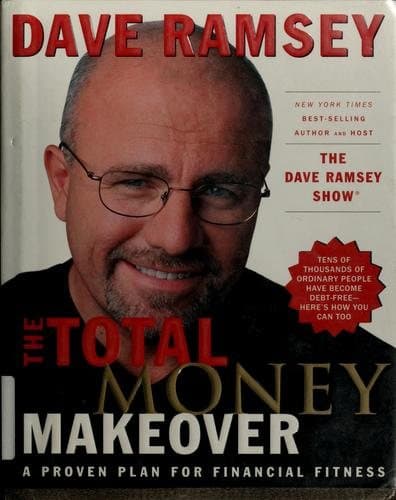
A no-nonsense, baby-step plan to get out of debt and stay out.
The big idea
Ramsey's seven Baby Steps offer a strict, sequential plan: a $1,000 starter emergency fund, debt snowball (smallest balance first), 3–6 months expenses saved, then invest, college, mortgage, and giving. He's blunt about credit cards, leases, and 'normal' debt being normal because most people are broke. The math is sometimes suboptimal (debt avalanche pays less interest), but the behavioral wins from quick small victories often beat the spreadsheet.
Start with a $1,000 starter emergency fund before anything else.
Dave Ramsey filed for personal bankruptcy in 1988 at age 28 after his real estate empire collapsed. He'd built it on short-term debt; when his bank was sold to a competitor and called the notes, the empire vanished in 90 days. The Total Money Makeover, published in 2003, turned the recovery into a seven-step program. Step 1 is $1,000 in a separate savings account.
Debt snowball — pay smallest debts first for momentum, not lowest interest first.
Ramsey acknowledges the math says attack the highest interest rate first — what's now called the avalanche method. He argues against it anyway, because personal finance is 'personal' — 80% behavior, 20% knowledge. List debts smallest to largest and kill the smallest first. The quick win produces the dopamine that fuels the next one.
Cut up the credit cards; you can't get out of a hole while still digging.
Ramsey is flatly anti-credit-card. At his live events, he holds card-cutting parties — attendees take scissors to their wallets onstage to applause. The premise: you cannot reform a destructive tool by using it more carefully. The recovering alcoholic doesn't learn to drink moderately; he stops drinking. Same principle.
Live on a written zero-based budget every single month.
Every dollar of income gets a job before the month begins — rent, food, gas, debt payment, savings — until income minus assignments equals zero. Ramsey's term: 'tell every dollar where to go before the month begins.' Without the written plan, the month tells your dollars where to go, which is wherever they're easiest to spend.
After debt-free, stash 3–6 months of expenses in a real emergency fund.
Ramsey calls Baby Step 3 'Murphy repellent' — once you're out of debt, a fully-funded emergency fund (3 months for stable jobs, 6 for variable income or single earners) keeps Murphy from re-introducing you to debt. He recommends a money market account: accessible in a day or two, paying modest interest, emphatically not invested in stocks where it could vanish exactly when needed.
Invest 15% of household income for retirement; only after debt-free + emergency fund.
Baby Step 4 is the first step where wealth creation begins. Ramsey prioritizes Roth and tax-advantaged accounts, recommends growth stock mutual funds, and assumes a long-run 10-12% return — a number critics dispute. The behavioral discipline of 15% from every paycheck is what gets ordinary households to retirement millionaire status, not investment genius.
Live like no one else now, so later you can live and give like no one else.
Ramsey's tagline. The hard middle — beans and rice for two years, the paid-off rusted Camry, the skipped vacations — is the price for the radical end. At the end of the seven Baby Steps, households end up with zero debt, a paid-off house, and the freedom to walk into a hospital and pay an oncology bill in cash for a stranger.
The takeaway
Ramsey's gift is treating personal finance as eighty percent behavior and accepting that suboptimal arithmetic beats optimal plans you abandon. The smallest debt killed first produces the dopamine the avalanche method never delivers, which is why the Wharton data quietly vindicated him. You leave with the Browns' tagline running in the background — live like no one else now, so later you can live and give like no one else — and a $1,000 wall built before the transmission ever fails.