Summary
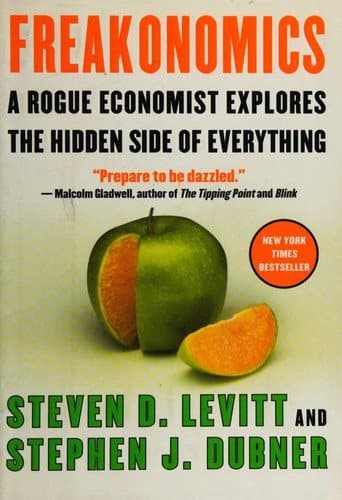
Freakonomics isn't about money — it's about how people actually behave once you strip away the stories they tell themselves. University of Chicago economist Steven Levitt teams with journalist Stephen Dubner to argue that economics is really the study of incentives, and that almost any riddle yields to good data and a willingness to ask odd questions. They show Chicago schoolteachers and Japanese sumo wrestlers cheating in the same telltale patterns, real-estate agents quietly working against their own clients, and the Ku Klux Klan undone less by force than by leaked information. Their most explosive claim — that legalized abortion, not better policing, drove the 1990s crime drop — made the book infamous. Throughout, the authors separate correlation from causation and markers from causes, insisting that what looks obvious is often wrong. The result is less a manifesto than a way of seeing: follow the incentives, distrust the conventional wisdom, and measure what actually matters.
Key highlights
What we learned from Steven D. Levitt
Levitt and Dubner hand you a lens, not a list of answers: behind every puzzling outcome sits an incentive, and behind every confident expert sits an information advantage. The discipline they teach is to distrust the obvious story, separate a marker from a cause, and let honest measurement — however inconvenient — settle the question.