Summary
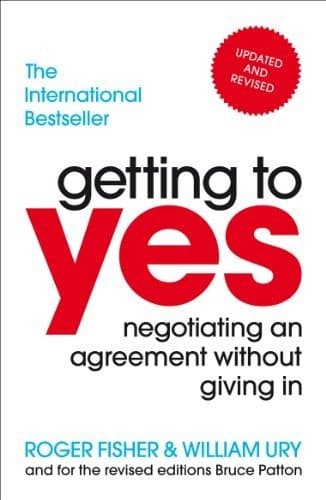
Fisher and Ury, leaders of the Harvard Negotiation Project, dismantle the assumption that bargaining is a zero-sum fight between hard and soft styles. They propose principled negotiation, built on four moves: separate the people from the problem, focus on interests rather than positions, invent options for mutual gain, and insist on objective criteria. Each principle has a story behind it — Egypt and Israel at Camp David, two children fighting over an orange, a library where one reader wants the window open and the other wants it closed. The book also introduces the concept of BATNA — your Best Alternative to a Negotiated Agreement — as the only honest measure of your bargaining power. The argument is structural rather than tactical: most negotiations fail not because the parties are unskilled but because they confuse positions with interests and treat each other as adversaries rather than as joint problem-solvers. Decades after publication, the book remains the foundational vocabulary for nearly every negotiation course in the world.
Key highlights
What we learned from Roger Fisher
Fisher and Ury reframe negotiation from a battle between hard and soft styles into a joint search for principled agreement, anchored by four moves and one diagnostic — your BATNA. The book's lasting gift is a vocabulary precise enough to make the invisible parts of a deal — interests, alternatives, fair process — finally negotiable. Get good at the four moves and most positional fights stop being fights at all.