Summary
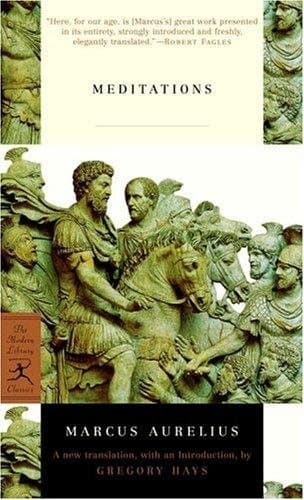
Meditations is not a book Marcus Aurelius wrote for anyone; it is the private journal of the most powerful man in the world, scribbled to himself in Greek by lamplight in military camps along the Danube during the Marcomannic Wars. The original had no title we would recognize — scholars call it roughly To Himself — and its twelve short books read like a man arguing himself back to calm, again and again. The philosophy is Stoicism, inherited above all from the former slave Epictetus, whose Discourses Marcus had been lent by his teacher Junius Rusticus. Its core claim is severe and liberating: events are indifferent, and all our suffering comes from the judgments we attach to them, judgments that remain entirely in our power. From that root grow the book's recurring themes — that obstacles are the raw material of virtue, that death should sharpen rather than darken the present, that you should stop theorizing about goodness and simply be good, and that other people's cruelty cannot stain you unless you imitate it. Marcus wrote all this while burying most of his children, ruling through a plague that killed millions, and surviving the betrayal of his own general. Eighteen centuries later it remains the closest thing we have to a manual for keeping your head while everything around you comes apart.
Key highlights
What we learned from Marcus Aurelius
Marcus Aurelius never meant to teach us anything — Meditations is a powerful man talking himself off a ledge, over and over, which is exactly why it still works. Its gift is a single durable lever: you cannot control what happens, only the judgment you attach to it, and that judgment is always yours to revise. Read it as what it is — not a system to admire but a practice to repeat, on the ordinary bad mornings when nothing has gone wrong yet except your own mind.