Summary
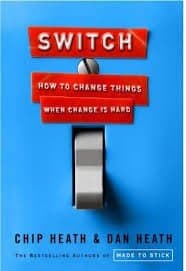
Chip and Dan Heath argue that every change problem — personal or organizational — is a conflict between three actors: the rational Rider, the emotional Elephant, and the situational Path. The Rider/Elephant metaphor is borrowed from social psychologist Jonathan Haidt; the operating manual is the brothers' own. Drawing on case studies from Jerry Sternin's malnutrition program in Vietnam, Steve Booth-Butterfield's 1% milk campaign in West Virginia, Donald Berwick's 100,000 Lives Campaign, and a first-grade teacher named Crystal Jones at an Atlanta elementary school, the Heaths identify the predictable failure modes of change. The Rider gets paralyzed by analysis. The Elephant gets exhausted by self-control. The Path — the environment, the defaults, the structure of the situation — is the lever change-makers chronically ignore. The book's nine chapters lay out a specific playbook: find the bright spots, script the critical moves, point to the destination, find the feeling, shrink the change, grow your people, tweak the environment, build habits, and rally the herd. The argument is uncomfortable for managers who blame their people: what looks like a people problem is almost always a situation problem.
Key highlights
What we learned from Chip Heath
The Heaths' gift is the diagnostic discipline of three actors. When change stalls, you stop asking why people are resistant and start asking which actor is failing — is the Rider unclear, the Elephant exhausted, or the Path designed against us? Jerry Sternin's answer in Vietnam was the bright spots already in the rice paddies; Steve Booth-Butterfield's was 'switch to 1% milk' instead of 'eat better.' You leave with one sharper habit: before blaming the person, fix the situation.