Summary
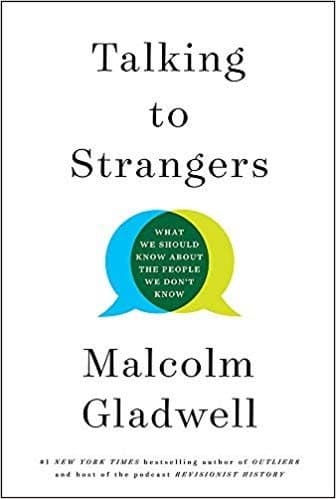
Malcolm Gladwell opens and closes with Sandra Bland, the Black woman pulled over for a missed turn signal in rural Texas in 2015 and found dead in a jail cell three days later, and uses her death to ask a larger question: why are we so bad at making sense of strangers? His answer rests on three flawed tools. First, we 'default to truth' — we assume people are honest, which is why CIA officers missed the Cuban double agent Ana Montes and the SEC ignored Harry Markopolos's warnings about Bernie Madoff for years. Second, we trust 'transparency,' the belief that a person's face and demeanor reliably reveal what's inside — a belief that helped convict the innocent Amanda Knox and that collapses the moment you study cultures, or sitcoms, where expression and feeling don't line up. Third, we ignore 'coupling,' the way behavior is welded to specific places and conditions, which is why Sylvia Plath's suicide and the Golden Gate Bridge jumpers can't be understood apart from their context. Gladwell draws on Tim Levine's deception research, Neville Chamberlain's disastrous face-to-face reads of Hitler, and the economics of bail decisions to argue that our instinct to look people in the eye and 'take their measure' is precisely what fails us. The book is less a how-to than a warning: the search to understand a stranger has real limits. The right response, he concludes, is caution and humility.
Key highlights
What we learned from Malcolm Gladwell
Gladwell's gift is to make our confidence feel suspicious. We are built to trust, to read faces, and to judge people apart from their circumstances — and each of those instincts, useful as it is, quietly betrays us with the people we know least. What we carry away is not a lie-detector trick but a discipline: hold our certainty loosely, look at the stranger's world before the stranger's face, and approach the people we don't know with caution and humility.