Summary
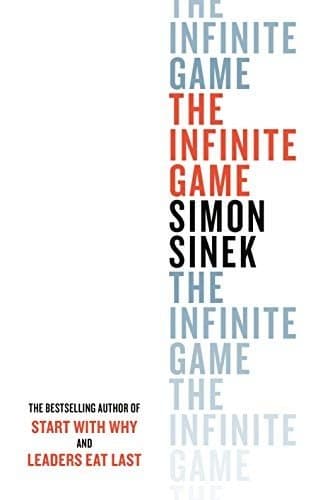
Sinek builds his book on the foundation of philosopher James Carse's 1986 work Finite and Infinite Games, which distinguished games played to win (finite) from games played to keep playing (infinite). Sports, elections, and lawsuits are finite — fixed players, fixed rules, agreed endpoint. Business, education, geopolitics, and life are infinite — players come and go, rules evolve, the goal is continued play. Most modern executives, Sinek argues, are running infinite games with finite mindsets: optimizing for the next quarter as if there were a final whistle. The result is short-term wins followed by structural decay. Sinek illustrates the framework through extended case studies — Microsoft under Ballmer versus Nadella, Walmart versus Costco, Apple's retail strategy — and offers five practices for infinite-mindset leadership: a Just Cause, Trusting Teams, a Worthy Rival, Existential Flexibility, and the Courage to Lead.
Key highlights
What we learned from Simon Sinek
Sinek's gift, borrowed from James Carse, is the recognition that business is an infinite game — no fixed players, no final whistle — and most CEOs bleed their organizations dry playing it as finite. Ballmer's Microsoft fought to beat Apple and went flat for fourteen years; Nadella reframed the cause and quadrupled the cap. You leave knowing a Just Cause must outlast the company, Worthy Rivals are mirrors not enemies, and Existential Flexibility — risking your model for the cause — is what separated Disney from Kodak.