Summary
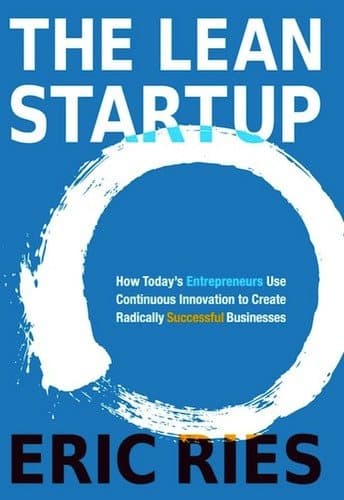
Eric Ries spent his twenties watching well-funded startups ship beautifully-built products into total customer indifference, including his own. After his first venture, IMVU, launched in 2004 and made $300 its first month, he reverse-engineered the failure pattern and arrived at a simple claim: a startup is not a smaller version of a company but an experimental organization whose only real output is validated learning. The Lean Startup, published in 2011, imports Toyota's lean manufacturing playbook — Taiichi Ohno, kanban, the Five Whys — and adapts it to the radical uncertainty of new products. The core loop is Build-Measure-Learn: ship a minimum viable product, instrument what real users do, then decide whether to persevere or pivot. Ries distinguishes vanity metrics that flatter founders from actionable metrics that force decisions, and he treats every incident as a chance to invest in prevention proportional to its severity. The book launched a movement and gave a generation of founders a working vocabulary — MVP, pivot, innovation accounting — for treating product development as disciplined inquiry rather than confident execution.
Key highlights
What we learned from Eric Ries
Ries's gift is reframing the startup from a smaller version of a company into an experimental organization whose only real output is learning. Once you accept that the plan is mostly guesswork, the question stops being 'how do we execute?' and becomes 'what's the cheapest test that could prove us wrong?' You leave thinking less about polish and more about how quickly the next experiment can run.