Summary
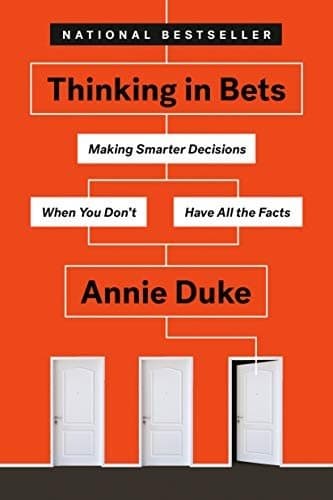
Annie Duke spent two decades as a professional poker player after leaving a PhD program in cognitive psychology — and she argues the two careers taught the same lesson. Most decisions, like poker hands, are made with hidden information and a heavy dose of luck, yet we judge them as if life were chess, where every outcome traces cleanly back to a single move. Duke calls this error 'resulting': mistaking the quality of an outcome for the quality of the decision that preceded it. Her remedy is to treat every decision as a bet — an explicit wager on an uncertain future, priced in probabilities rather than false certainties. That reframe forces a handful of habits: separating skill from luck when reviewing what happened, saying 'I'm not sure' instead of faking confidence, and inviting other people to challenge our self-serving stories. Drawing on game theorist John von Neumann, psychologist Daniel Gilbert, and Cold War intelligence analyst Sherman Kent, she builds a practical system for thinking clearly under uncertainty. The goal isn't to be right more often — it's to make better bets, and to keep learning from the ones that don't pan out.
Key highlights
What we learned from Annie Duke
Duke's gift is a working vocabulary for uncertainty — 'resulting,' 'fielding outcomes,' and 'wanna bet?' turn fuzzy intuitions into tools you can actually pick up. Once you stop grading decisions by how they happened to turn out and start grading them by the process behind them, you free yourself to take smart risks — and to forgive yourself for the good bets that simply didn't land.