Summary
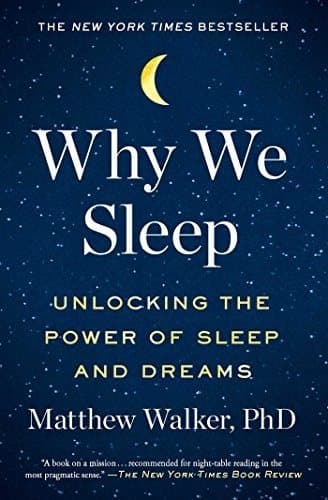
Matthew Walker, a Berkeley neuroscientist who directs the Center for Human Sleep Science, argues that the modern world has been quietly hostile to the most foundational biological process we have. Drawing on three decades of laboratory experiments, epidemiological data, and clinical trials, he reframes sleep as not a passive luxury but the regulator of memory, emotional balance, immune function, hormonal health, and even genetic expression. The book maps the architecture of NREM and REM cycles, the chemistry of adenosine and melatonin, and the cumulative damage of even modest nightly restriction. Walker is provocative on the cognitive cost of all-nighters (equivalent to legal drunkenness), the heart-attack spike that follows daylight saving time's spring lurch, and the collision between teenage circadian biology and absurdly early school bells. Caffeine, alcohol, and screens are framed as the three great saboteurs of restorative sleep. The closing chapters call for institutional change — in schools, hospitals, workplaces — alongside personal shifts. The thesis lands hard: short sleep is not a badge of honor; it is a silent toxin shaving years off the life that's bragging about it.
Key highlights
What we learned from Matthew Walker
Walker's gift is to turn sleep from background noise into the most leveraged variable in your day. Once you see the data — the drunk-driver cognition, the heart-attack ledger, the brain quietly rinsing itself — eight hours stops looking like indulgence and starts looking like the cheapest medicine ever invented. The work is not to sleep more virtuously; it is to stop apologizing for sleeping at all.