Summary
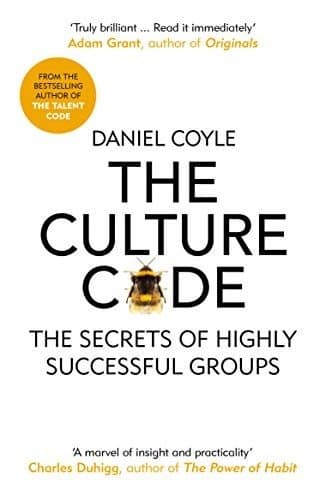
Coyle set out to answer a deceptively simple question: why do some groups add up to more than the sum of their parts? After embedding with the San Antonio Spurs, Pixar, Navy SEAL Team Six, and even a band of jewel thieves, he concluded that culture is not a mysterious trait but a set of learnable skills. Strong groups run on three of them: they build safety through constant belonging cues, they share vulnerability so members learn to trust and depend on one another, and they establish purpose through vivid stories and catchphrases that point toward a shared future. The signals are almost absurdly small — eye contact, a swept-out locker room, a leader admitting they were wrong — but compounded over time they produce extraordinary cooperation. Coyle's central claim is that belonging precedes performance and vulnerability precedes trust, reversing the order most of us assume. The book reads less like theory than a field manual, full of experiments like Will Felps's 'bad apple' study and Peter Skillman's marshmallow challenge. Its through-line: culture is something you do, not something you are.
Key highlights
What we learned from Daniel Coyle
Coyle's gift is proving that great culture is not a personality trait or a lucky accident — it's a craft, assembled from belonging cues, shared vulnerability, and vivid purpose that anyone can practice. Once you see Jonathan quietly making a room feel safe, or the All Blacks sweeping their own locker room, the question stops being 'do we have good chemistry?' and becomes 'what small signal can I send right now?' You leave treating culture as a verb.