Summary
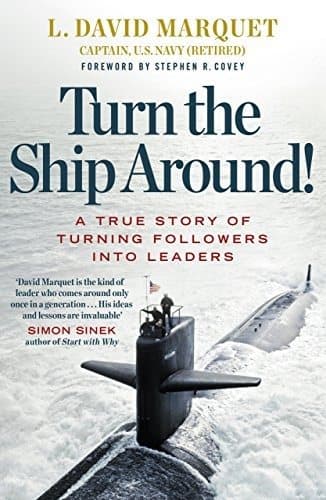
Marquet, a U.S. Navy submarine captain, took command of USS Santa Fe in 1999 — at the time the worst-performing submarine in the Pacific Fleet. He had been trained for a different ship, knew almost nothing about Santa Fe's specific systems, and inherited a crew shaped by years of top-down command. Within a year, Santa Fe was rated the best-performing submarine in the fleet, with the highest retention rate in the Navy. Marquet credits a single inflection: he stopped giving orders. After accidentally giving an impossible command early in his tenure and watching the helmsman attempt to obey it anyway, he resolved to replace the leader-follower model with what he calls leader-leader. The book is the story of how that worked, hierarchy by hierarchy, on a 130-man nuclear submarine where mistakes can kill people.
Key highlights
What we learned from L. David Marquet
Marquet's gift is the smallest linguistic intervention with the largest structural effect: replace 'request permission' with 'I intend to,' and the cognitive work shifts from the captain to the person closest to the situation. Santa Fe went from worst sub in the Pacific to best in twelve months, with retention — sailors voting with their careers — as the verdict. You leave resolved to push authority to where the information lives, refuse to solve problems your team brings you, and create leaders rather than forge followers.